

What to Expect in Your Behaviour Consultation
I know booking a behaviour consultation can feel a little daunting.
Perhaps you're worried that it will feel formal, that you'll be asked lots of difficult questions, or that you'll be expected to have all the answers. Maybe you're even a little nervous about someone coming into your home and seeing your dog's behaviour first-hand.
But it doesn't have to feel like that. want your consultation to feel like sitting down with someone who genuinely wants to understand your dog. We'll have a chat, I'll ask questions, you can tell me what's been happening, and together we'll start joining the dots.
First thing's first...
Stick the kettle on! These consultations are relaxed and conversation based, so we will spend most of the time sitting down and talking everything through.
Before we get started
If your dog is nervous around new people, worried by visitors, or has any history of biting, please pop them behind a gate, in their crate, or somewhere else safely separated when I arrive.
This isn't because your dog is "bad". It simply gives everyone some breathing space and allows your dog to settle without being put under unnecessary pressure.
If your dog is comfortable around new people, we can take things at their pace and see how they feel about having me in their home.
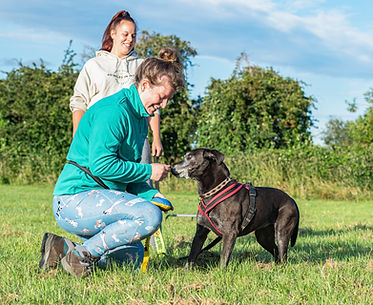
How long will it take?
Your consultation will usually last around 2 to 3 hours.
That might sound like a long time, but there is a lot to talk about! We don't rush through a checklist. We take the time to understand your dog properly and make sure you have the opportunity to ask questions.
The consultation is split into two main parts.
Part 1 - Getting to know your dog
During the first half, I will ask lots of questions about your dog and their life. This includes their
history, daily routine, environment, behaviour patterns and any training you have already tried. I
will also ask about your home set up and the situations where the behaviour tends to happen.
These questions help build a full picture of your dog and the factors influencing their behaviour.
Part 2 - Part 2: Making sense of it
Once we've talked everything through, we'll start putting the pieces together.
I'll explain what I think may be happening and, importantly, why your dog may be behaving the way they are.
We'll look at the emotional drivers behind the behaviour and discuss the factors that might be making it easier or harder for your dog to cope.
Then we'll talk about what we can do about it.
This might include:
-
Management strategies
-
Changes to your dog's environment or routine
-
Training and behaviour modification
-
Helping your dog cope with difficult situations
-
Building new skills
-
Reducing stress and arousal
-
Changing how we respond to certain situations
I'll explain everything in plain English and we'll talk through how it can work in your actual day-to-day life.
There will also be plenty of time for questions.
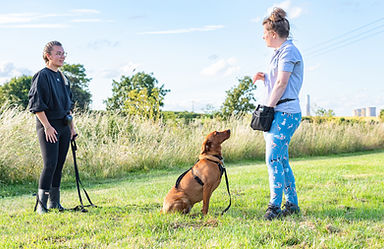
What if my dog doesn't show the behaviour?
This is something lots of owners worry about.
I don't need to see your dog displaying the behaviour in order to help you.
In fact, deliberately putting your dog into a situation that causes them stress just so I can see the behaviour isn't usually necessary or helpful.
Your observations, the history you provide and the information we gather during the consultation give us a huge amount to work with.
If you have videos of the behaviour happening naturally, these can also be really useful.
So don't worry if your dog suddenly becomes the world's best behaved dog when I arrive!
That's not a failed consultation.
And if your consultation is online...
It's pretty much exactly the same!
I'll send you an invitation to a Google Meet via email once payment has been made.
Google Meet works on your phone, tablet or computer, although you may need to download the app depending on the device you're using.
For an online consultation, we'll simply make sure we're somewhere quiet where you can talk comfortably and, where possible, show me your dog's environment. I will ask for lots of videos beforehand to give me an idea of the behaviours your dog is displaying.

And most importantly...
You don't need to arrive with a perfectly behaved dog.
You don't need to have everything figured out.
And you don't need to feel embarrassed about what your dog is doing.
You're asking for help because you care about your dog.
That's exactly where we start.
We'll take the time to understand what your dog is telling us, work out what might be driving their behaviour and create a realistic plan to help you both move forward.
You've taken the first step. Let's work out the next one together.
If you have any questions before your consultation, just get in touch.
I look forward to meeting you and your dog soon!
Alice Watts
Clinical Animal Behaviourist
Education4Paws
alice@education-4-paws.com